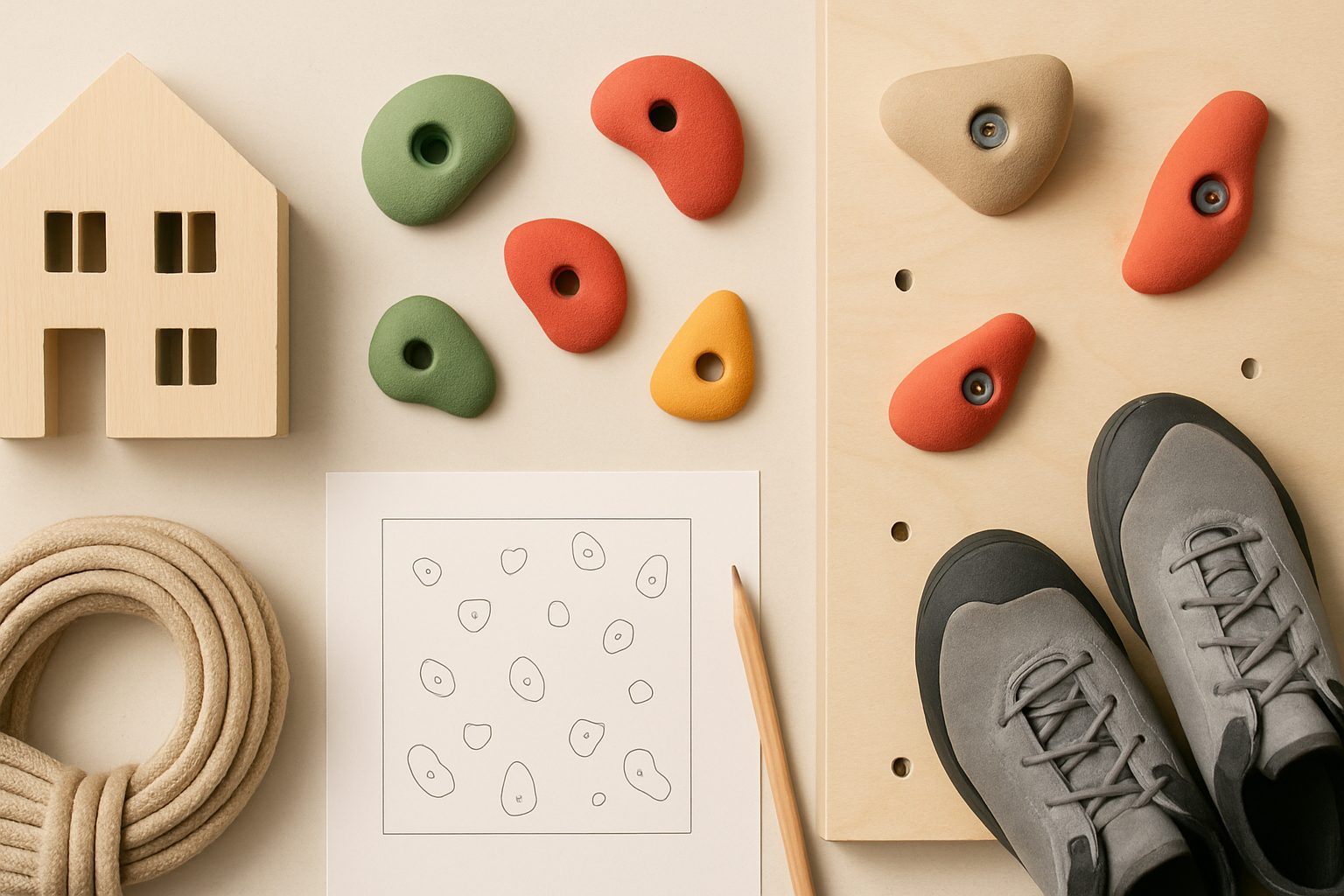
How to Build a Home Climbing Wall in the UK: Step-by-Step Guide
Building a home climbing wall transforms a spare room, garage, or garden into a serious training space. Unlike outdoor climbing, you control the angle, hold placement, and difficulty—perfect for technique work and bad-weather training. But it's a project that demands real planning. Get the fundamentals wrong and you'll either waste money or create something unsafe.
Assess Your Space and Structure
Before buying materials, inspect your walls and ceiling properly. Most UK homes use brick or block with plasterboard, and plasterboard alone won't support climbing. You need to identify solid structure: the brick or block underneath, wooden joists, or steel. Tap the wall carefully—solid sections sound dull, hollow plasterboard sounds hollow.
Measure ceiling height. A wall angled between 10 and 20 degrees overhanging requires about 2.5 metres clear height to land safely. Vertical walls need less but are harder to climb at home (they're less forgiving and psychologically tougher). Most home builders aim for 2.4–2.7 metres usable height.
Check for utilities. Your wall will have bolts and fixings penetrating the surface. Verify there's no electrical wiring, plumbing, or gas pipes in your chosen area by using a cable detector (£15–30) or hiring a professional survey. This is non-negotiable.
Moisture is critical. Garages and basements must be dry. Condensation on wood frame and plywood degrades them fast and creates unsafe conditions. If your space is damp, solve that first or relocate your project.
Design and Frame Build
Most UK home walls use a simple timber frame bolted to solid structure. Standard designs use 50×100mm or 50×75mm timber (cost and weight differ significantly).
For a beginner's vertical wall about 2.4m tall and 1.2m wide, you'll need:
- Four vertical uprights bolted to the brick
- Horizontal rails at roughly one-metre intervals to brace the frame
- An overhang angle of 10–15 degrees for most home climbers (steeper angles demand better conditioning and look impressive but see fewer climbing days)
Bolt the frame to the wall using M12 bolts into the brick, typically 600mm centres. Don't skimp here—penetrate full depth into the solid material, not just the plasterboard. You're anchoring a structure that'll hold your full body weight in unexpected directions.
Use level equipment. A 1–2 metre spirit level and a plumb bob are essential. Drift of even 10mm across a metre becomes obvious and dangerous when you're climbing.
Frame cost (materials only): £200–400 depending on timber quality and size.
Sheath with Plywood
Climbing walls need solid backing. Standard 18mm exterior-grade plywood bolts to the frame. This is where most home builders succeed or fail.
Cut sheets to fit your frame and bolt them on with 6mm bolts through to the timber at 300–400mm centres. Stagger the bolt pattern so no two bolts align vertically (stress concentrations). Fill bolt holes with wooden plugs if you're finishing neatly.
Don't use OSB or particle board. Plywood holds fasteners better, resists edge delamination from moisture, and lasts. MDF is cheaper and terrible—it crumbles when wet and doesn't grip holds well.
For a wall angle, thin plywood is fine. For overhanging, 18mm is minimum; 21mm is safer but heavier and pricier.
Plywood cost: £80–150 for a basic vertical wall; £200+ for a larger overhang.
T-Nut Installation
T-nuts accept climbing holds via bolts. Install them in a regular grid pattern, typically 200×200mm or 250×250mm spacing. Closer spacing gives more route setters more options.
Mark hole positions using a template (cardboard or plywood with drilled holes, placed and traced). Drill through the plywood into the timber backing at least 50mm, then install a threaded insert or rivet T-nut from the back. If you're bolting T-nuts from the front, use large washers to distribute the load.
Standard 3/8" (10mm) T-nuts are typical. Install them level and flush. A misaligned T-nut twists holds and causes injuries.
Pattern choice matters. Vertical grids are easiest and most versatile. For angled walls, offset the grid slightly so holds sit flat on the angle—this takes more planning but climbs better.
T-nut cost: 50–100 per wall, roughly £40–80 total.
Layout and Holds
This is where beginner mistakes show. Symmetry looks neat but doesn't make good climbing. Real routes cluster holds in flowing sequences that train specific movements.
Start with 20–30 holds if you're new to setting. Arrange them in rough diagonal or zigzag paths, with bigger holds lower for easier access and smaller (harder) holds higher. Avoid placing two big jugs side by side at the top—climbers will just pull hard and learn nothing.
Professional setters create problems with names and grades. At home, you don't need grades, but naming routes (like "Slopers" or "Crimpers") helps you and any partners remember what you've climbed.
Buy holds from a climbing supplier that stocks UK brands and mainstream options. Cheap holds crack, expensive holds aren't always better, mid-range (£3–8 per hold) balances durability and cost. Textured plastic is standard; wood holds are expensive and need more care.
Rotate holds every few months if you're climbing hard. Constant grinding on the same edges flattens them.
Final Checks
Before inviting anyone to climb:
- Pull hard on every hold and bolt. Nothing should move.
- Inspect the landing zone. Thick foam mat, or clear floor space for controlled fall-rolls.
- Test the wall yourself with easy routes first.
- Tidy electrical cables away from the wall.
A home climbing wall costs £500–1,200 in materials for a basic 2.4×1.2m vertical build, more for larger sizes or overhangs. It takes a weekend for an experienced builder, longer if you're learning. Done properly, it'll serve you and your household for years of training and fun.
More options
- Climbing Hold Sets (Assorted Packs) (Amazon UK)
- Hangboards & Fingerboards (Amazon UK)
- Bouldering Crash Mats & Pads (Amazon UK)
- Home Climbing Wall Kits & Panel Systems (Amazon UK)
- T-Nuts, Bolts & Wall Hardware (Amazon UK)