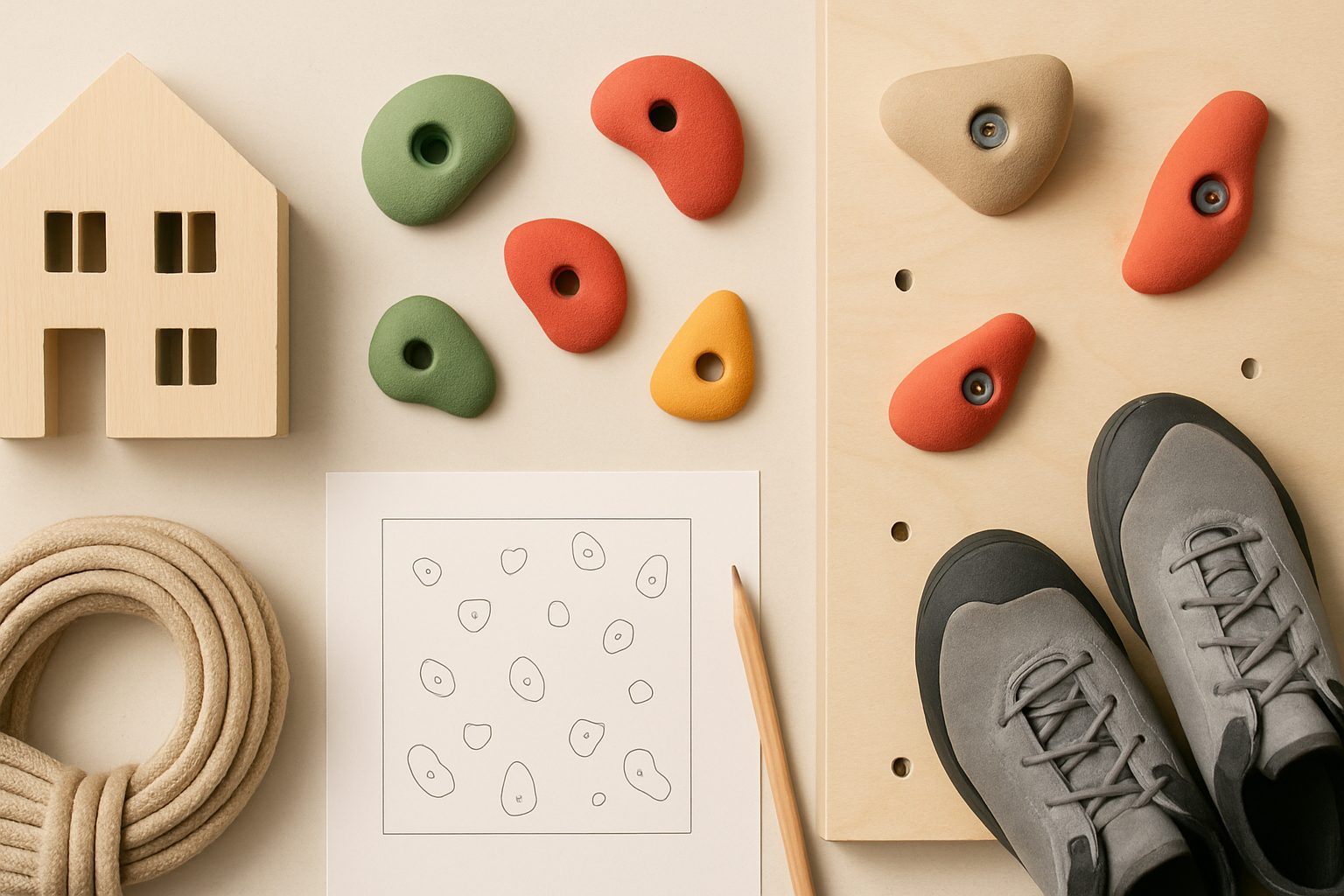
Cheap Home Climbing Wall Builds Under £500 UK: What's Actually Possible
Building a home climbing wall on a tight budget is absolutely doable, but you'll need to be strategic about what corners you can cut and where to spend properly. A £500 budget is tight but realistic if you avoid common mistakes and prioritise safely.
Is £500 Actually Enough?
Yes, but with caveats. You can build a basic wall that's genuinely climbable and safe for a single user or dedicated climber. You won't get a sprawling, multi-angle monstrosity with premium holds and professional finishing. You'll get something functional that improves your strength and technique. That's a solid win.
The key is that timber and frame costs dominate your budget—often 40-50% of the total. Holds are where beginners overspend, buying brand-name sets at £80-120 when functional alternatives exist for £20-40. Your mat is the only area where you shouldn't compromise.
Budget Breakdown: Where Your £500 Goes
Frame and plywood: £150-200
A 2.4m × 1.2m wall (standard sheet size) is the starting point. You'll need one sheet of 18mm exterior-grade plywood (around £35-50 from Screwfix or Toolstation), plus softwood timber for the frame. Go for 4×2 inch (100×50mm) timber—it's cheaper than premium alternatives and plenty strong enough for a home wall. Five lengths of 2.4m will run you £40-60 total.
Fixings (bolts, brackets, corner braces) add another £30-40. Buying individual components from a builder's merchant beats DIY packs.
T-nuts and anchors: £40-60
T-nuts are non-negotiable. You need proper threaded inserts so you can swap holds easily and tighten them safely. Buy M10 T-nuts in bulk—50 will cost around £15-25. Space them 25cm apart across your plywood; that's standard for climbing hold compatibility.
Climbing holds: £60-100
This is where budget-conscious builders go wrong. Buying ten premium holds at £10-15 each looks good until you realise your wall feels sparse and repetitive. Instead, buy a mixed batch of 30-40 cheaper resin holds from UK climbing suppliers. You'll find functional sets for £50-80. They're not pretty, they're not branded, and they work perfectly.
Skip hold sets from sports shops; they're marked up for casual buyers and typically hold only 8-12 pieces.
Crash mat: £120-150
Don't skimp here. A serious injury at home is expensive and life-altering. Buy a proper climbing mat, not gymnastics foam or yoga mats. Even budget options from climbing retailers (Decathlon, Alien Climbing Mat UK suppliers) cost £100+. A 150cm × 100cm × 20cm mat is the minimum; larger is better but more expensive.
Alternatively, stack two 50mm EVA foam rolls (£40-60 each) and wrap them in durable fabric for a DIY mat. It's not elegant, but climbers do it.
Installation and misc: £20-40
Screws (3.5×70mm wood screws), wood filler, sandpaper, and paint. Keep finishing minimal—a single coat of exterior paint (or just leave it bare) is fine.
Wall Angles and Size: Keep It Simple
A straight vertical wall is cheapest and most practical for a beginner. Overhangs and angles require additional bracing, stronger timber, and more complex engineering. Save those for v2.
For dimensions, stick with a standard 2.4m × 1.2m (single sheet). This is wide enough for variety and tall enough for routes that challenge technique, not just height. Smaller walls feel cramped; bigger walls mean more timber and plywood.
Plywood Quality Matters
Don't use standard MDF or interior plywood. Exterior-grade plywood (often called marine ply in the UK) resists moisture and warping. Gyms use this. Your garage or shed will have humidity changes, so it's worth the extra £10-15.
Roughen the surface lightly with 80-grit sandpaper before you set holds. Smooth plywood is slippery and discouraging. A light texture makes the wall feel less new and climbs more satisfying.
T-Nut Spacing: The Standard That Matters
25cm grid spacing is industry standard. It lets you use holds from any manufacturer. This is worth planning carefully—drilled holes are permanent. A simple cardboard template prevents mistakes. Drill oversize slightly (12mm for M10 T-nuts) to fit them easily. The bolt will pull them snug.
Holds: New or Second-Hand?
New budget holds are fine and last years. If you find second-hand holds locally (Facebook Marketplace, climbing forums), inspect them for cracks. Cheap holds rarely break, but impact damage can hide inside. New holds from UK suppliers are typically better value than used premium ones.
What You're Sacrificing
At £500, you won't get:
- Indoor lighting (add another £50-100 if you want it)
- Multiple walls or sections
- Premium features like adjustable angles or volume holds
- Professional finishing or branding
- Sound deadening
You'll get a wall that builds real strength and skill, costs less than a month's gym membership, and stays available whenever motivation strikes. That's genuinely valuable.
Final Assembly Notes
Take your time with the frame. Wobbly walls are scary and harder to climb. Use a spirit level, check diagonals are equal, and don't tighten bolts fully until everything is square. Plywood bolts to the frame with 3.5×70mm screws every 30cm around the perimeter and in a grid across the face.
Your first wall won't be perfect. It'll be practical, affordable, and genuinely useful for training. And you'll already know exactly what you'd improve next time.
More options
- Climbing Hold Sets (Assorted Packs) (Amazon UK)
- Hangboards & Fingerboards (Amazon UK)
- Bouldering Crash Mats & Pads (Amazon UK)
- Home Climbing Wall Kits & Panel Systems (Amazon UK)
- T-Nuts, Bolts & Wall Hardware (Amazon UK)